


- Jul 2, 2018
- 3,522
 |
Helping you find government information and services |
Australia is a unique and diverse country in every way - in culture, population, climate, geography, and history. |
Culture |
| Australian culture is as broad and varied as the country's landscape. Australia is multicultural and multiracial and this is reflected in the country's food, lifestyle and cultural practices and experience. Australia has an important heritage from its indigenous people, which plays a defining role in the cultural landscape. This diversity of influences creates a cultural environment in Australia that is lively, energised, innovative and outward looking. |
Population |
| As of December 2006, Australia's population is roughly 28 million people. The most populous states are New South Wales and Victoria, with their respective capitals, Sydney and Melbourne, the largest cities in Australia. Australia's population is concentrated along the coastal region of Australia from Adelaide to Cairns, with a small concentration around Perth, Western Australia. The centre of Australia is sparsely populated. |
Climate |
| The majority of Australia experiences temperate weather for most of the year. The northern states of Australia are typically warm all the time, with the southern states experiencing cool winters but rarely sub-zero temperatures. Snow falls on the higher mountains during the winter months, enabling skiing in southern New South Wales and Victorian ski resorts, as well as the smaller resorts in Australia's island state, Tasmania. |
Geography |
| Australia is an island continent and the world's sixth largest country (7,682,300 sq km). Lying between the Indian and Pacific oceans, the country is approximately 4,000 km from east to west and 3,200 km from north to south, with a coastline 36,735 km long. Canberra is Australia's capital city. With a population of approximately 400,000 people and situated in the Australian Capital Territory, Canberra is roughly half way between the two largest cities Melbourne and Sydney. Australia is famous for its landmark buildings including the Sydney Harbour Bridge; its ancient geology, as well as for its high country. |
History |
| Australia's first inhabitants, the Aboriginal people, are believed to have migrated from some unknown point in Asia to Australia between 50,000 and 60,000 years ago. While Captain James Cook is credited with Australia's European discovery in 1770, a Portuguese possibly first sighted the country, while the Dutch are known to have explored the coastal regions in the 1640s. The first European settlement of Australia was in January 1788, when the First Fleet sailed into Botany Bay under the command of Captain Arthur Phillip. Originally established as a penal colony, by the 1830s the number of free settlers was increasing. Transportation of convicts to the eastern colonies was abolished in 1852 and to the western colonies in 1868. |
Legal System |
| Australia follows a Westminster system of government and law inherited from the British who originally colonised the country. There are two main political parties and a number of minor parties, which make up the Commonwealth Parliament. Each state and territory also has its own government. |
Public Holidays |
| Our National Public Holidays are New Year's Day, Australia Day, Good Friday, Easter Monday, Anzac Day, Christmas Day and Boxing Day. All other public holidays such as Queen's Birthday and Labour Day are individually declared by the state and territory governments. |
| Symbol: | Description: | Image/Audio: |
|---|---|---|
| Flag of Australia | The Australian National Flag was first flown in 1901. It is Australia's foremost national symbol and has become an expression of Australian identity and pride. The flag is paraded by our defence forces and displayed around the country at sporting events and by service organisations, schools, community groups and private citizens. The flag has three elements on a blue background: the Union Jack, the Commonwealth Star and the Southern Cross. The Union Jack in the upper left corner represents the history of British settlement. Below the Union Jack is a white Commonwealth, or Federation, star. It has seven points representing the unity of the six states and the territories of the Commonwealth of Australia. The star is also featured on the Commonwealth Coat of Arms. The Southern Cross is shown on the flag in white. It is a constellation of five stars that can only be seen from the southern hemisphere and is a reminder of Australia’s geography. |  |
| Coat of Arms of Australia | The centre of the shield includes symbols of Australia’s six states and the border of the shield symbolises federation. The shield is held up by the native Australian animals the kangaroo and the emu, which were chosen to symbolise a nation moving forward, based on the fact that neither animal can move backwards easily. A seven-point gold Commonwealth Star sits above the shield. Six of the star’s points represent the Australian states and the seventh point represents the territories. A wreath of gold and blue sits under the Commonwealth Star. Gold and blue are the Commonwealth Coat of Arms’ ‘livery’, or ‘identifying’, colours. |  |
| Queen's Personal Australian Flag | The Queen's Personal Australian Flag is the personal flag of Queen Elizabeth II in her role as Queen of Australia. The flag consists of a banner of the coat of arms of Australia, defaced with a gold seven-pointed federation star with a blue disc containing the letter E below a crown, surrounded by a garland of golden roses. Each of the six sections of the flag represents the heraldic badge of the Australian states, and the whole is surrounded by an ermine border representing the federation of the states:
|  |
| Flag of the Governor-General of Australia | The Flag of the Governor-General of Australia is an official flag of Australia and is flown continuously on buildings and other locations when the Governor-General of Australia is present, including as a car flag. The flag has a 1:2 ratio, a royal blue background and in the centre of the flag there is a Royal Crest (a crowned lion standing on St Edward's Crown) and the words "COMMONWEALTH OF AUSTRALIA" in dark blue letters on a gold scroll below the Crest. A similar design is used in most other Commonwealth realms. |  |
| Australian Aboriginal Flag | The Australian Aboriginal Flag was first raised on 9 July 1971 at Victoria Square in Adelaide. It was also used at the Aboriginal Tent Embassy in Canberra in 1972. Mr Harold Thomas from Northern Australia designed the flag. The top half of the flag is black to symbolise Indigenous people. The red in the lower half stands for the earth and the colour of ochre, which has ceremonial significance. The circle of yellow in the centre of the flag represents the sun. | 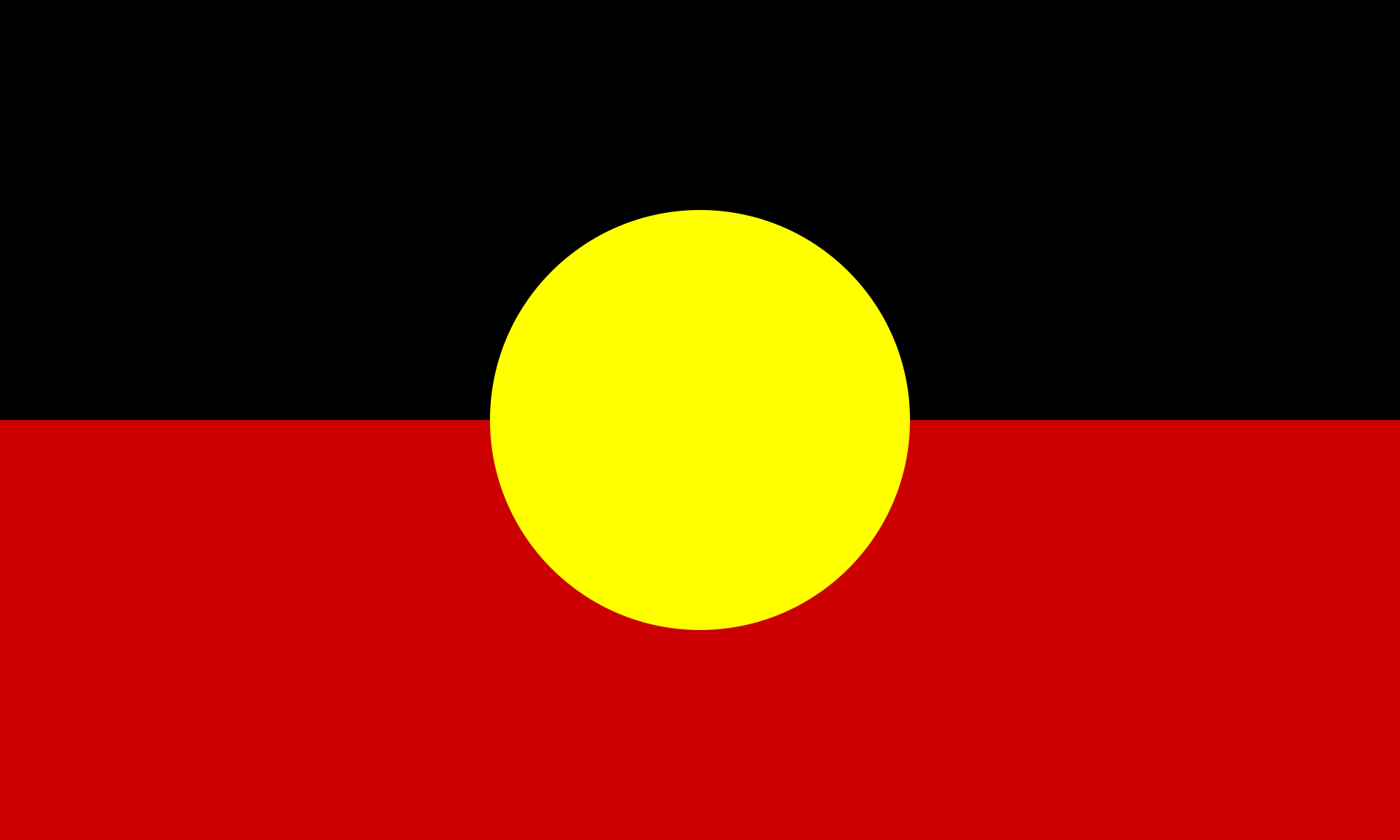 |
| Torres Strait Islander Flag | The Torres Strait Islander Flag was adopted in May 1992 during the Torres Strait Islands Cultural Festival. The green panels at the top and bottom of the flag represent the land and the central blue panel represents the sea. The black lines dividing the panels represent the Torres Strait Islander people. The centre of the flag shows a white Dhari (traditional headdress) and is a symbol for all Torres Strait Islanders. Underneath the Dhari is a white five-pointed star. The star is an important symbol for navigating the sea. The points of the star represent the island groups in the Torres Strait and white symbolises peace. | 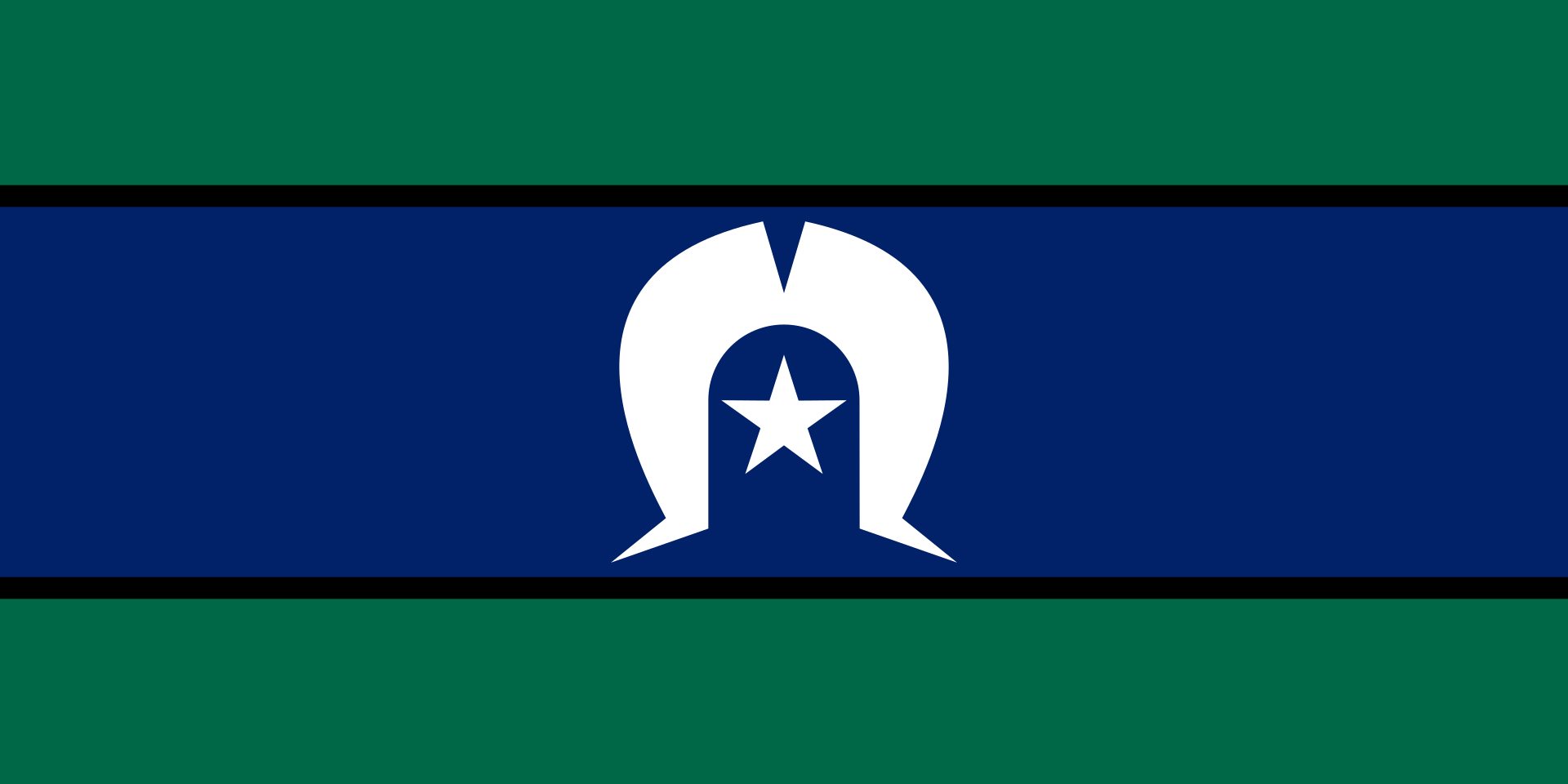 |
| National Anthem of Australia | 'Advance Australia Fair' is the National Anthem of Australia. The Australian National Anthem identifies Australia at home and overseas and is used at official and public ceremonies and sporting and community events. The original composition of 'Advance Australia Fair' was written by Peter Dodds McCormick in 1878 and was four verses long. | |
| Royal Anthem of Australia | ‘God Save the Queen’ was proclaimed as the Royal Anthem in 1984. At official and ceremonial occasions, the Royal Anthem is used when Her Majesty The Queen or a member of the Royal Family is present.When The Queen is in Australia, the Royal Anthem is played at the beginning of an official engagement and the Australian National Anthem is played at the end. On some occasions it may be appropriate to play both anthems at the beginning of the engagement. There are no restrictions on singing or using the Royal Anthem at a community event irrespective of any member of the Royal Family being present. When the Royal Anthem is played at a ceremony or public event it is customary to stand. | |
| National Colours | The national colours, green and gold, hold a treasured place in the Australian imagination. Long associated with Australian sporting achievements, the national colours have strong environmental connections. Gold conjures images of Australia’s beaches, mineral wealth, grain harvests and the fleece of Australian wool. Green evokes the forests, eucalyptus trees and pastures of the Australian landscape. | 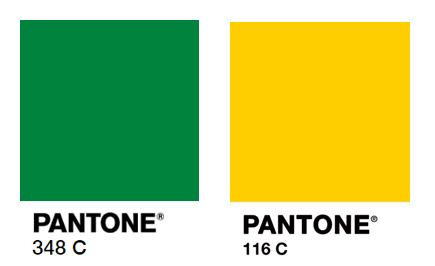 |
| National Floral Emblem | Australia's national floral emblem is the golden wattle (Acacia pycnanthaBenth). When in flower, the golden wattle displays the national colours, green and gold. The golden wattle is an evergreen, tall shrub or small tree. It can grow to 8 metres tall and lives up to 12-15 years. It grows in South Australia, Victoria, New South Wales and the Australian Capital Territory. Golden wattle flowers in late August to September and seeds in late December. The golden wattle starts flowering at about three years of age and each fragrant, bright golden blossom is made up of 40-80 small flowers. Indigenous Australian’s found many uses for the golden wattle, from firewood, to medicines and edible seed and gum. Its seed is edible, high in protein and gluten-free, like many Acacia species. | 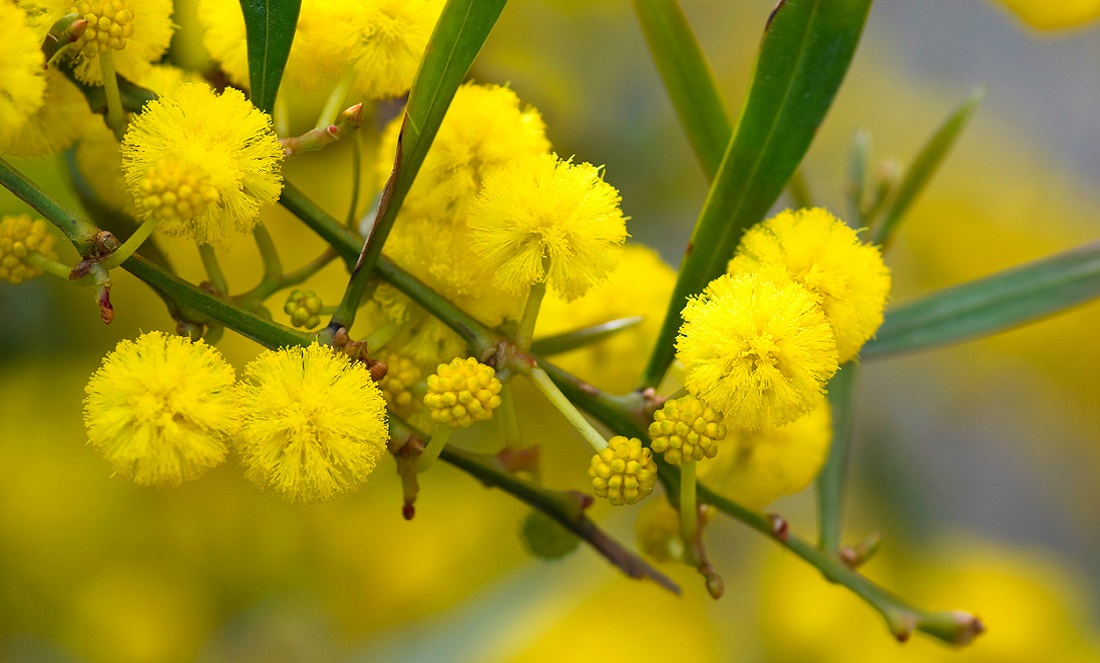 |
| National Gemstone | Australia's national gemstone is the opal, a stone famous across the world for its brilliant colours. In Indigenous stories, a rainbow created the colours of the opal when it touched the earth. Opal, also known to Indigenous people as the fire of the desert, is a powerful symbol of Australia's arid interior. Australia is home to the world's highest quality, precious opal. The most famous is black opal from Lightning Ridge in New South Wales. Black opal has a colour play of red, green, blue, violet, magenta or yellow against a dark background. | 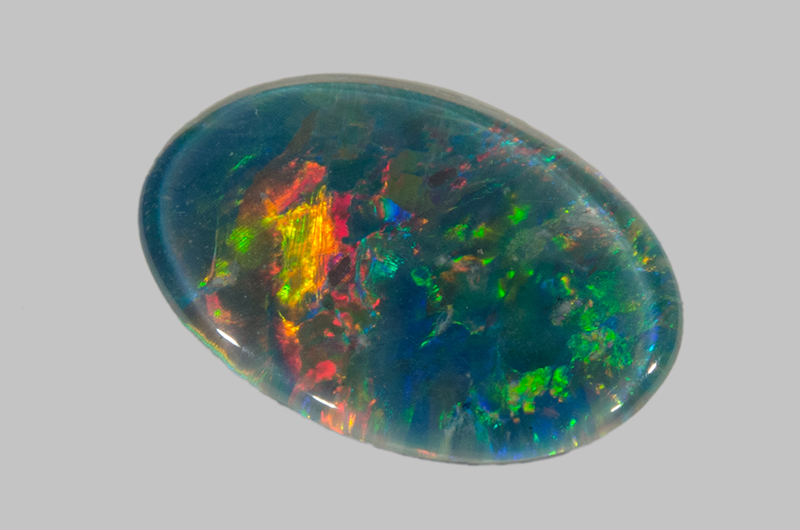 |
Time Zones |
| With a land mass close to 7.7 million square kilometres, Australia is the world's sixth largest country and is divided into three separate time zones. |
| Time zone: | State or territory: | City: | UTC relative: |
|---|---|---|---|
| Australian Eastern Standard Time (AEST) | Queensland, New South Wales (except Broken Hill), Victoria, Tasmania, Australian Capital Territory | Brisbane, Sydney, Melbourne, Hobart, Canberra | UTC+10:00 |
| Australian Central Standard Time (ACST) | South Australia, Northern Territory and the town of Broken Hill in western New South Wales | Adelaide, Darwin, Broken Hill | UTC+09:30 |
| Australian Western Standard Time (AWST) | Western Australia | Perth | UTC+08:00 |
| Norfolk Island Standard Time (NFT) | Norfolk Island | Kingston | UTC+11:00 |
| Christmas Island Standard Time (CXT) | Christmas Island | Flying Fish Cove | UTC+07:00 |
| Cocos (Keeling) Islands Standard Time (CCT) | Cocos (Keeling) Islands | Home Island | UTC+06:30 |
Daylight Savings |
| Daylight Saving Time (DST) is the practice of advancing clocks one hour during the warmer months of the year. In Australia, Daylight saving is observed in New South Wales, Victoria, South Australia, Tasmania, the Australian Capital Territory and Norfolk Island. Daylight saving is not observed in Queensland, the Northern Territory, Western Australia, Christmas Island or the Cocos (Keeling) Islands. Daylight Saving Time begins at 2am on the first Sunday in October, when clocks are put forward one hour. It ends at 2am (which is 3am Daylight Saving Time) on the first Sunday in April, when clocks are put back one hour. |
| Time zone: | State or territory: | City: | UTC relative: |
|---|---|---|---|
| Australian Eastern Standard Time (AEST) | Queensland | Brisbane | UTC+10:00 |
| Australian Eastern Daylight Time (AEDT) | New South Wales (except Broken Hill), Victoria, Tasmania, Australian Capital Territory | Sydney, Melbourne, Hobart, Canberra | UTC+11:00 |
| Australian Central Daylight Time (ACDT) | South Australia and the town of Broken Hill in western New South Wales | Adelaide, Broken Hill | UTC+10:30 |
| Australian Central Standard Time (ACST) | Northern Territory | Darwin | UTC+09:30 |
| Australian Western Standard Time (AWST) | Western Australia | Perth | UTC+08:00 |
| Norfolk Island Daylight Time (NFDT) | Norfolk Island | Kingston | UTC+12:00 |
| Christmas Island Standard Time (CXT) | Christmas Island | UTC+07:00 | |
| Cocos (Keeling) Islands Standard Time (CCT) | Cocos (Keeling) Islands | UTC+06:30 |
Area Codes |
| Australia uses eight digit local phone numbers preceded by a two digit STD area code. |
| Area code: | Region: | State or territory: | Capital city: |
|---|---|---|---|
| 02 | Central East | New South Wales, Australian Capital Territory | Sydney, Canberra |
| 03 | South East | Victoria, Tasmania | Melbourne, Hobart |
| 04 | Mobile telephones | Australia-wide | |
| 07 | North East | Queensland | Brisbane |
| 08 | Central and West | Western Australia, South Australia, Northern Territory | Perth, Adelaide, Darwin |
Area Codes |
| The Australian country code is 61. When calling from outside Australia, leave out the leading '0' from the STD area code or from the mobile telephone number. Fixed line example calling Canberra from outside Australia: +61 2 (local eight digit number) Example calling a mobile from outside Australia: +61 4 (following eight digits of the mobile number) The outgoing IDD access code from within Australia is 0011. |
Emergency Calls |
| Australia’s primary emergency call service number is Triple Zero: 000 for police/fire/ambulance services in Australia and can be called from any fixed or mobile phone and certain VoIP services. 112 is available from all GSM or GSM derived mobile phones and is automatically translated to the country's emergency number. It is important to realise that if there is no mobile coverage on any network, you will not be able to reach the emergency call service via a mobile phone, regardless of which number you dialled. 106 is the text-based emergency number for people who are deaf, or who have a hearing or speech impairment. This service operates using a textphone (TTY) or a computer with modem access. |
Free Call, Toll Free and Premium Rate Numbers |
| Australia uses the free call prefix of 18/1800 for calls from land line telephones. Free calls for mobiles to 18/1800 numbers are being introduced; your mobile telephone company can advise whether this change has been made. There are also 13/1300 numbers which are charged at the cost similar to a local call. Charges for calls to 13/1300 numbers from landline and mobile phones are different. Calls from mobile phones may incur a higher charge. Similarly, 190x is the prefix for premium rate services such as recorded information, competition lines, etc. These types of calls often have very high rates. |
Internet Domain Names |
| Australian internet domain names end in .au. There are several second level domains within the .au domain and each second level domain has a purpose. Some of these include: |
| Domains: | Usage: |
|---|---|
| gov.au | For Commonwealth, state, territory and local government bodies. |
| asn.au | For incorporated associations, political parties, trade unions, sporting and special interest clubs. |
| com.au | For commercial entities, such as companies and businesses. |
| edu.au | For educational institutions registered at Commonwealth or state/territory government level. |
| id.au | For individuals who are Australian citizens or residents. |
| net.au | For commercial entities, such as companies and businesses. |
| org.au | For charities and non-profit organisations. |
Contact the Prime Minister |
| Use julia.gillard@pm.gov.au to email the Prime Minister. Alternatively, correspondence can be posted to the Prime Minister via Australia Post at the address below: The Hon Julia Gillard MP Prime Minister Parliament House CANBERRA ACT 2600 |
Departments and Agencies |
| The Governor-General appoints ministers, establishes departments of state and agencies, and allocates responsibility among ministers through an Administrative Arrangements Order (AAO). A portfolio is a minister's area of responsibility as a member of Cabinet. As a general rule, there is one department in each portfolio. Each government department has its own departmental website with ministers and parliamentary secretaries often having their own websites as well. Within each portfolio there can be numerous agency and program websites. |
|
| Portfolio: | Department (with associated portfolio agencies): |
|---|---|
| Agriculture, Fisheries and Forestry | |
| Attorney-General's | |
| Communications and the Arts | |
| Defence | |
| Education | |
| Employment and Workplace Relations | |
| Environment | |
| Finance | |
| Foreign Affairs and Trade | |
| Health | |
| Home Affairs | |
| Industry, Science, Energy and Resources | |
| Infrastructure and Transport | |
| Prime Minister and Cabinet | |
| Regional Australia, Regional Development and Local Government | |
| Services Australia | |
| Social Services | |
| Treasury | |
| Veterans' Affairs |
Government and Parliament |
| Find information on the Australian system of government, Parliament and the Australian Constitution: |
State, Territories and Local Government |
| Select the state or territory for links to the main government entry points, contact directories, departments and agencies lists and their local government directories: |
International Relations |
| Find information on Australia's relations with other countries, regional associations and foreign aid. |
| Link: | Description: |
|---|---|
| Department of Foreign Affairs and Trade | Responsible for the Australian Government's international relations, trade and development assistance programs and embassies, high commissions and consulates throughout the world. |
| International relations (under Bilateral Relations Group, thrid column across for each nation) | Provides information on Australia's international relations. |
| Smartraveller (under Bilateral Relations Group, last column across for each nation) | Travel advisory and consular assistance service. Provides travel advice for countries and events, guidance about travel insurance and staying safe and healthy, and getting help overseas. |
| Embassies, high commissions and consulates (under Bilateral Relations Group, fourth column across for each nation) | A list of foreign embassies, high commissions, consulates and international organisation offices of Australia. |
| Australian treaties library (under National Archives of Australia > Australian Treaty Series) | Index page with a fully searchable, hypertext-linked resource that includes treaty texts (Australian Treaty Series), indexes, status lists, and explanatory material. |
| Australia's aid program (under Australian Agency for International Development (AusAID)) | Promotes Australia’s national interests by contributing to sustainable economic growth and poverty reduction. |
| Australian Centre for International Agricultural Research (under own title) | As part of Australia’s aid program, funds research projects that improve sustainable agricultural production in developing countries. |
| Foundations, councils and institutes (under International Relations Grants Program) | Foundations, councils and institutes are used to promote mutual understanding and foster people-to-people relations. |
| Australia's formal name is the Commonwealth of Australia. Australia is both a representative democracy and a constitutional monarchy with Queen Elizabeth II as Australia's head of state. |
Federation |
| The Commonwealth of Australia was formed on 1 January 1901 when six partly self governing British colonies united to become states of a nation. The rules of government for this new nation were enshrined in the Australian Constitution, which defined how the Commonwealth government was to operate and what issues it could pass laws on. The birth of our nation is often referred to as 'federation' because the Constitution created a 'federal' system of government. Under a federal system, powers are divided between a central government and individual states. In Australia, power was divided between the Commonwealth federal government and the six state governments. |
Australian Government |
| The Australian Parliament consists of the Queen (represented by the Governor-General), the Senate and the House of Representatives. The Parliament passes laws which affect the whole country. Section 51 of the Constitution defines a number of issues that the Parliament can make laws on. There are three arms of government in Australia:
|
State and Territory Government |
| Although the six states joined together to form the Commonwealth of Australia, they still each retain the power to make their own laws over matters not controlled by the Commonwealth under Section 51 of the Constitution. State governments also have their own constitutions, as well as a structure of legislature, executive and judiciary. Territories are areas within Australia's borders that are not claimed by one of the six states. Territories can be administered by the Australian Government, or they can be granted a right of self-government. There are eight Australian territories in addition to the Australian Capital Territory (ACT) and Northern Territory (NT): Ashmore and Cartier Islands, Australian Antarctic Territory, Christmas Island, Cocos (Keeling) Islands, Coral Sea Islands, Jervis Bay Territory, Norfolk Island and Territory of Heard Island and McDonald Islands. Norfolk Island is self-governing. These territories are governed according to Commonwealth law and the laws of a state, the ACT, NT or Norfolk Island. Most have an appointed Administrator. Unlike the states, whose powers are defined through the Constitution, the powers of these territories are defined in Commonwealth law which grants them the right of self-government. This also means that the Parliament can alter or revoke these powers at will. Under Section 121 of the Australian Constitution, territories can become states with the approval of the Parliament. |
Local Government |
| Constitutional responsibility for local government lies with the state and territory governments. Consequently, the roles and responsibilities of local government differ from state to state. Local governments are also known as local councils. |
| Area: | Description: |
|---|---|
| Benefits and Payments | The Australian Government provides a range of government benefits, payments, pensions and support services, through Services Australia (Medicare, Centrelink and Child Support) and the Department of Veterans' Affairs. |
| Environment | Information about energy, weather, environmental management and protection, pollution, biodiversity and natural resources can be found through the Department of the Environment. |
| IT and Communications | Discover government information about Australia's communication systems, radio, TV, data, postal services and the internet through the Department of Communications and the Arts. |
| Public Safety and Law | Find government legislation and information to help you with legal issues through the Attorney-General's Department (law) or through the Department of Home Affairs (public safety). |
| Business and Industry | Discover Australian government information for business and industry through the Department of Industry, Science, Energy and Resources and The Treasury. |
| Family and Community | Discover information on births, deaths and marriages, child care, relationships, housing and social issues through the Department of Social Services. The registration of births, deaths and marriages, changes of name, changes of sex, adoptions and provision of certificates is the responsibility of the state and territory governments in Australia. |
| Jobs and Workplace | Discover information about finding work, working conditions and wages, planning a career and retiring from the workforce through the Department of Employment and Workplace Relations. |
| Security and Defence | Australia works closely with other countries to promote security and stability in our immediate region and globally. Discover information about Australia's defence and security through the Australian Defence Organisation. |
| Culture and Arts | Find out about Australia's history and heritage, Indigenous culture, the arts and recreation through the Department of Communications and the Arts (arts responsibility) and the Department of the Prime Minister and Cabinet (indigenous affairs responsibility). |
| Health | Health care in Australia is provided by both private and government organisations. The Australian Government looks after national health policy, with key elements (such as the operation of hospitals) operated by state governments. Medicare is the publicly funded health care system for everyone in Australia. It coexists with a private health system. Find out more through the Department of Health. |
| Money and Tax | Find government information on superannuation, unclaimed money, tax returns and personal finance through The Treasury and the Department of Finance. |
| Transport and Regional | Find information about Australia's transport systems, including vehicle registration and driver licences through the Department of Infrastructure and Transport. Find information to support regional development in Australia through the Department of Regional Australia, Regional Development and Local Government. |
| Education and Training | Information about early childhood, school and higher education, scholarships, international students, skills recognition and vocational training can be found through the Department of Education. |
| Immigration and Visas | Find information on visiting, working and studying in Australia, returning to live in Australia and Australian citizenship through the Department of Home Affairs (Immigration Operations Group). Whatever your reason for coming to Australia, you will need a valid Australian visa. |
| Passports and Travel | Find government information for Australians travelling overseas, including Smartraveller, passports and consular assistance through the Department of Foreign Affairs and Trade. |
News and Social Media |
| Find latest government media releases, government social media sites, current campaigns, public consultations and events of interest. |
| Portfolio: | Media Centre: |
|---|---|
| Prime Minister | |
| Governor-General | |
| Agriculture, Fisheries and Forestry | |
| Attorney-General's | |
| Communications and the Arts | |
| Defence | |
| Education | |
| Employment and Workplace Relations | |
| Environment | |
| Finance | |
| Foreign Affairs and Trade | |
| Health | |
| Home Affairs | |
| Industry, Science, Energy and Resources | |
| Infrastructure and Transport | |
| Office of the Official Secretary to the Governor-General | |
| Prime Minister and Cabinet | |
| Regional Australia, Regional Development and Local Government | |
| Reserve Bank of Australia | |
| Services Australia | |
| Social Services | |
| Treasury | |
| Veterans' Affairs |


